
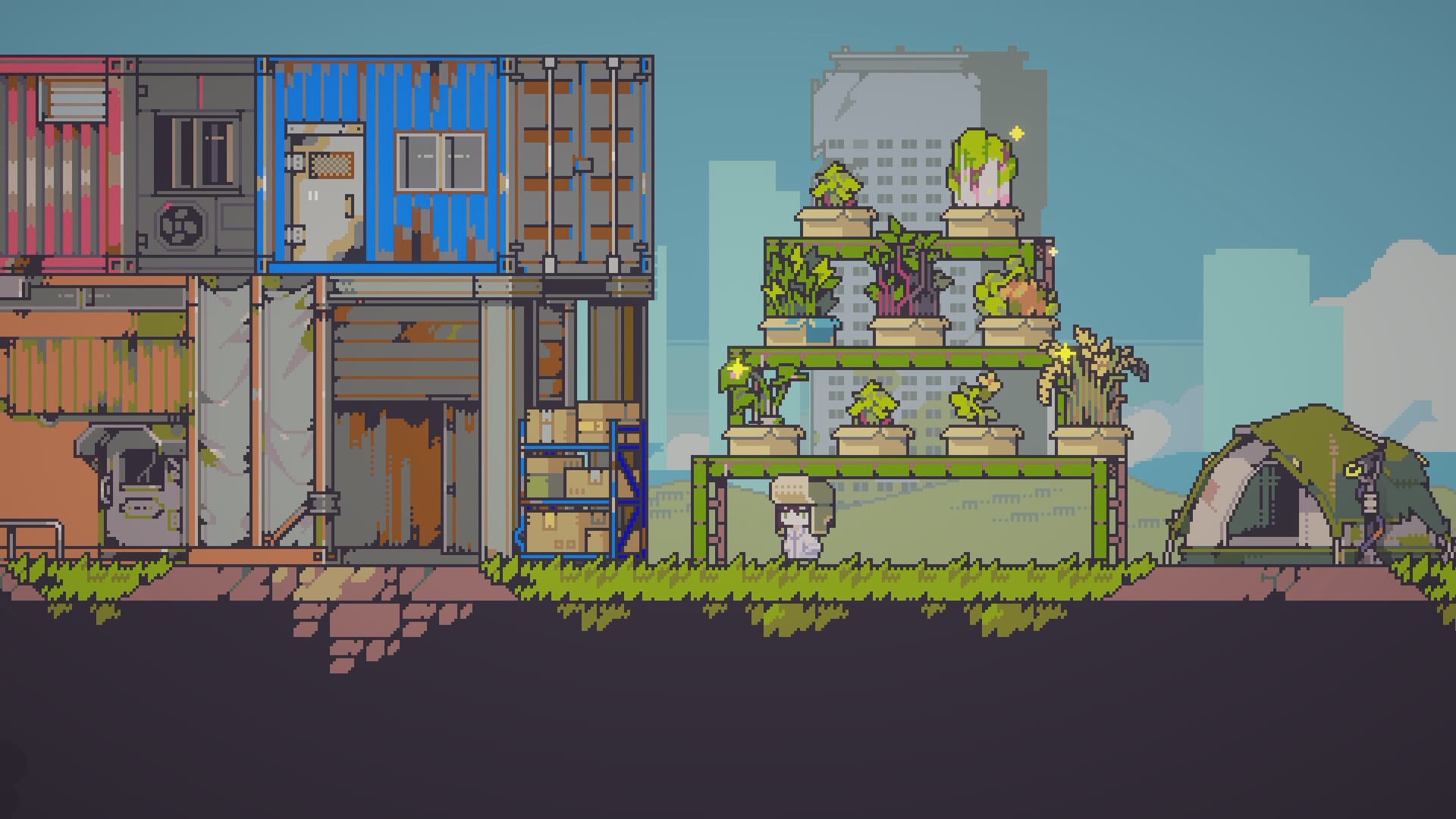
Check a seed’s growing months and weather resistance before planting, water it every day, and protect vulnerable crops with plastic mulch or containers.
How Doloc Town crops work
Choose a seed that can grow in the current month, place it in a planter, water it every day and protect it if its listed traits do not resist the coming weather. Each crop has its own first-harvest time, yield and possible regrowth interval, so the best choice depends on how long the month has left and what you need the harvest for. Planters, weather protection, Seed Research and gene traits then add new layers to that basic cycle.
Start with planters and vertical space
The first basic planter boxes are easy to make but are designed for one planting cycle. Stronger wooden planters last longer and become a sensible early upgrade once the technology and materials are available. Because horizontal land is restricted, the farm expands upward through platforms rather than through a conventional flat field.
Do not destroy a planter while a crop is still growing. Collected 1.0 footage shows that the planter and some materials can return while the living crop and seed are lost. Harvest first, reorganize second and plant the next cycle only when the layout is settled.
Check crop status every day
Interact with a planted crop to inspect its current status. The recorded full-release footage shows this panel reporting progress toward harvest, whether the plant needs water, and whether mulch or compost has been applied. This is the most reliable way to diagnose a crop that is not advancing as expected.
Verified crop examples
The collected crop reference records thirty crops and provides exact growing conditions for the following examples. “Light Rain” and “Heavy Rain” are growing-month names used by the game, not instructions to leave the plant exposed during a rain event. Values should still be checked against the in-game database after balance patches.
| Crop | Growing months | First harvest | Regrowth | Yield | Sell price |
|---|---|---|---|---|---|
| Endyam | Light Rain and Heavy Rain | 2 days | None | 1 | 40 G |
| Strawberry | Light Rain and Heavy Rain | 8 days | 5 days | 2–4 | 85 G |
| Eden Fruit | Any month | 7 days | 3 days | 1 | 800 G |
Match planting to the remaining month
The game includes an achievement for clearing a dead crop after planting immediately before its season changes, confirming that an out-of-season plant can die. The safer approach is to keep short-cycle crops ready for the end of a month and save longer crops for a fresh growing period. The exact length and transition rules of every 1.0 month should be read from the in-game calendar and are TBD where the collected sources do not provide a full calendar table.
Protect crops from extreme weather
Not all crops survive acid rain or thunderstorms. Inspect the characteristics listed on a seed to see whether the plant has relevant resistance. For a vulnerable crop, the collected guide identifies plastic mulch and protected containers as the two early defensive options.
Containers protect plants from the weather, while plastic mulch is introduced through a short in-game tutorial. Ordinary weather and hostile weather must therefore be handled differently: useful rain can reduce routine work, but acid rain can damage both crops and exposed farm structures. Keep protection ready before committing valuable or slow-growing seeds.
Place sprinklers around the farm route
Sprinklers reduce one of the largest recurring stamina costs, but their value depends on placement. The collected pre-release 1.0 footage measured a Manual Sprinkler and an Electric Sprinkler with different horizontal and vertical ranges, including coverage across platforms above and below the device. Because that footage came from a beta copy, the final version 1.0 dimensions are TBD and should be checked in the placement overlay.
Use the Archives before selling everything
The Archives accepts the first example of crops through Sacco in the collected guide. Submitting a new crop updates the database with useful details such as harvest frequency, and the recorded reward is better than simply selling that individual crop through the normal shipment route. For that reason, keep the first harvest of every unfamiliar plant until its archive status is checked.
Progress through Seed Research
The plant-analysis storyline introduces Seed Research. Collected gameplay shows the player bringing harvested crops to complete research reports and unlock new seeds, while the achievement guide records “Eden’s Miracle” for unlocking eighteen seeds through Alchemy’s Seed Research. This makes crop variety a progression requirement rather than a purely cosmetic collection.
Keep at least one sample of a newly harvested crop until you know whether a report needs it. Research can ask for repeated submissions, and the source footage shows several reports being completed before a new seed becomes available. Exact report counts, requirements and unlock order are TBD unless they are visible in the current in-game research panel.
Understand crop genes without guessing
The Harvest Fusion update added a dedicated gene system, a gene-focused technology tree, equipment and close to twenty seed mutations according to the official update material. The collected crop guide also identifies gene traits as affecting crop planning, including traits related to yield and growth behavior. Gene work therefore belongs after the basic planter and harvest routine is stable.
Build a reliable crop routine
Begin the day by checking water and growth status, then harvest mature groups with the sickle. Replant only after confirming the current month, the days to first harvest and any regrowth window. Inspect protection before bad weather and leave research or archive crops out of the sales shipment.
As the farm grows, move from disposable planters to durable containers, then add verified sprinkler coverage and finally layer in genes and automation. This order matters because automation cannot rescue a crop planted in the wrong month, and a valuable gene cannot compensate for missing weather protection. Every advanced system assumes that the basic crop cycle already works.
Crop planning checklist
- Read the seed’s growing months and weather resistance.
- Compare first-harvest time with the days remaining in the month.
- Allow extra time if a regrowing crop is meant to produce more than once.
- Water daily until confirmed sprinkler coverage takes over.
- Use plastic mulch or containers for vulnerable crops.
- Harvest groups with the sickle.
- Submit the first unfamiliar crop to the Archives before selling it.
- Keep samples that may be required for Seed Research.
- Confirm gene activation and inheritance inside the current game build.
- Never dismantle a planter while a valuable crop is still growing.
The best Doloc Town crops are the ones that fit the current month, survive the forecast and serve the next goal. Start with reliable short cycles, keep research samples, and expand only after watering and protection are under control. Once that foundation is stable, regrowth crops, Seed Research, genes and automation can increase output without turning the farm into an unmanageable daily chore.
How this guide was checked
Crop timings, traits, weather notes, and research guidance were retained only where the collected references agreed.
- Official Doloc Town Steam pageRelease, developer, platform, and official game overview.
- Steam Community reference guideCommunity-maintained reference tables checked against the collected notes.
- 30+ Early Game Tips & Tricks videoFull-release gameplay demonstrations and timestamped route notes.
Reviewed by the Doloc Town Wiki editorial team for version 1.0 · Last evidence review: 2026-08-10 · Read the editorial policy
Put crops into a complete opening route
Use storage, tools, fishing and technology choices to support a manageable farm.
Doloc Town Guide: First Week, Farming & Fishing